Quick links
maktaaq
[Inuit maktak]
DCHP-3.1 (Jan 2026)
Spelling variants:muktuk, maktaq, mattaaq, mattaq, mattak, maktak, maptak, maktark
1an. — North, Territories, Arctic
a traditional Inuit food of whale blubber and skin, often made from beluga, bowhead, or narwhal.
Type: 5. Frequency — Maktaaq comes from Inuit maktak, which is a traditional Inuit food prepared from whale blubber and skin. Maktaaq is traditionally eaten raw, and is sometimes referred to as whale sushi or sushi of the north.
Since the term maktaaq comes from the Inuit language groups, which has various regional dialects in Northern Canada, Alaska, and Greenland, the term has many listed variants (See Image 2). Among the listed Canadian Inuit languages, Dorais highlights 14 unique dialects (See Image 3); listing Maktaq as the primary variant in Inuinnaqtun and Natsilik dialects; maktaaq as the primary variant in Kivalliq, Aivilik, North Baffin, South East Baffin, and South West Baffin, and as a secondary variant in Siglitun dialects; and mattaaq as the primary variant in Nunavik Itivimut and Tarramiut dialects (See Reference 5). Of the other Canadian Inuit dictionaries, maktaaq is also the primary listed headword in Igloolik (See Reference 4), Inuktitut (See Reference 6), Siglit Inuvialut (See Reference 2), and Inuit Uquasinginnik dictionaries (See Reference 8). maktaq is the primary listed headword in Kangiryuarmiut Eskimo (See Reference 1), Inuinnaqtun (See References 7 & 13), and Historical Inuit dictionaries (See Reference 10).
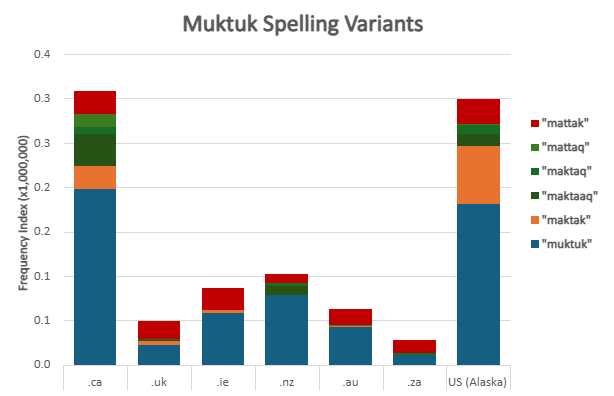
mattak is listed as the primary variant in Labrador Inuttut, West Greenlandic Kalaallisut, and East Greenlandic Kalaallisut (See Reference 5). It is listed as the primary headword in the Inuttut dictionaries (See Reference 9) and also in the Dictionary of the West Greenland Eskimo Language (See Reference 12). This accounts for the usage of the variant in Canada (See Chart 2), and as such, it is marked as being a distinct Greenland and Labrador spelling variant of muktuk.
maktak is listed as the primary variant in Uummarmiutun and Siglitun dialects (See References 5, 2 & 6). maktak and maptak are also listed as the primary headwords in the Inupiat Eskimo Dictionary (Alaska) (See Reference 12).
maktaaq is a Type 5: Canadianism due to it's comparative usage to the Alaskan and Greenlandic Inuit variants. The variants with an -aq ending seems to be distinct to the Canadian Inuit dialects; not including Labrador.
Since the term maktaaq comes from the Inuit language groups, which has various regional dialects in Northern Canada, Alaska, and Greenland, the term has many listed variants (See Image 2). Among the listed Canadian Inuit languages, Dorais highlights 14 unique dialects (See Image 3); listing Maktaq as the primary variant in Inuinnaqtun and Natsilik dialects; maktaaq as the primary variant in Kivalliq, Aivilik, North Baffin, South East Baffin, and South West Baffin, and as a secondary variant in Siglitun dialects; and mattaaq as the primary variant in Nunavik Itivimut and Tarramiut dialects (See Reference 5). Of the other Canadian Inuit dictionaries, maktaaq is also the primary listed headword in Igloolik (See Reference 4), Inuktitut (See Reference 6), Siglit Inuvialut (See Reference 2), and Inuit Uquasinginnik dictionaries (See Reference 8). maktaq is the primary listed headword in Kangiryuarmiut Eskimo (See Reference 1), Inuinnaqtun (See References 7 & 13), and Historical Inuit dictionaries (See Reference 10).
mattak is listed as the primary variant in Labrador Inuttut, West Greenlandic Kalaallisut, and East Greenlandic Kalaallisut (See Reference 5). It is listed as the primary headword in the Inuttut dictionaries (See Reference 9) and also in the Dictionary of the West Greenland Eskimo Language (See Reference 12). This accounts for the usage of the variant in Canada (See Chart 2), and as such, it is marked as being a distinct Greenland and Labrador spelling variant of muktuk.
maktak is listed as the primary variant in Uummarmiutun and Siglitun dialects (See References 5, 2 & 6). maktak and maptak are also listed as the primary headwords in the Inupiat Eskimo Dictionary (Alaska) (See Reference 12).
maktaaq is a Type 5: Canadianism due to it's comparative usage to the Alaskan and Greenlandic Inuit variants. The variants with an -aq ending seems to be distinct to the Canadian Inuit dialects; not including Labrador.
Among the many spelling varients, muktuk represents the anglicanized spelling of the Inuit word, and represents how the non-northern parts of Canada and the US see the word.
Maktaaq is the primary variant for the eastern Canadian Inuit groups: Kivaliq, Aivaliq, and Baffin Island.
Maktaq is the primary variant for the western Canadian Inuit groups: Inuinnuqtun, and Natsilik.
Mattaaq is the primary variant for the Arctic Quebec Inuit groups: Itivimiut, and Tarramiut.
Mattak is the primary variant for the Labrador Inuit group: Inuttut.
Maktaq is the primary variant for the western Canadian Inuit groups: Inuinnuqtun, and Natsilik.
Mattaaq is the primary variant for the Arctic Quebec Inuit groups: Itivimiut, and Tarramiut.
Mattak is the primary variant for the Labrador Inuit group: Inuttut.
Quotations
2014
One day, for instance, Dorothy Edwards, the head of the camp kitchen, lays out a tray of "country food" for the local workers: crosshatched slivers of maktaaq (narwhal blubber: black skin, pink flesh, tastes like flavourless gum but produces a noticeable swell of warmth in the stomach); tuktu (raw caribou, semi-frozen, sometimes dipped in soy sauce); and raw iqaluk (char). The Inuit fall on it with almost unseemly relish.
2024
In Greenland, we gasp as the skies overhead dance with the vibrant greens, pinks and purples of the Northern Lights two nights in a row. We're treated to the sight of humpback whales and dolphins frolicking in the waves while sailing near Battle Harbour, and on another sunny afternoon, platters of raw meat and fish like tuktu (Caribou), Arctic char and maktaaq (whale skin) are laid out for us to sample the traditional Inuit diet.
References
- Basic Kangiryuarmiut Eskimo Dictionary: Kangiryuarmiut Uquahingita Numiktittitdjutingit • maktaq
- Siglit Inuvialuit Uquasiita Kipuktirutait: Basic Siglit Inuvialuit Eskimo Dictionary • maktaaq & maktak
- Eskimo-English, English-Eskimo Dictionary: Inuktitut-English, English-Inuktitut Dictionary • maktark
- Uglulinmiut Uquasingit: the Inuit Language of Igloolik, N.W.T. = Le Parler Inuit d'Igloolik • maktaaq
- 1000 Inuit Uquasingit: 1000 Inuit Words = 1000 Mots Inuit • List of Subdialectal Variants
- Inuktitut: a Multi-dialectal Outline Dictionary (with an Aivilingmiutaq base). • maktaaq & maktak
- Inuinnaqtun to English Dictionary 2012 • maktaq
- Inuit Uquasinginnik Taiguusiliuqtiit • maktaaq
- Labradorimi Ulinnaisigutet: An Inuktitut - English Dictionary of Northern Labrador Dialect (with an English-Inuktitut index). • mattak
- Historical Dictionary of the Inuit • maktaq
- Dictionary of the West Greenland Eskimo Language • mattak
- Iñupiat Eskimo Dictionary • maktak
- Inuinnaqtun to English Dictionary 1996 • maktaq
- Lexique Analytique du Vocabulair Inuit Moderne ae Québec-Labrador
Images
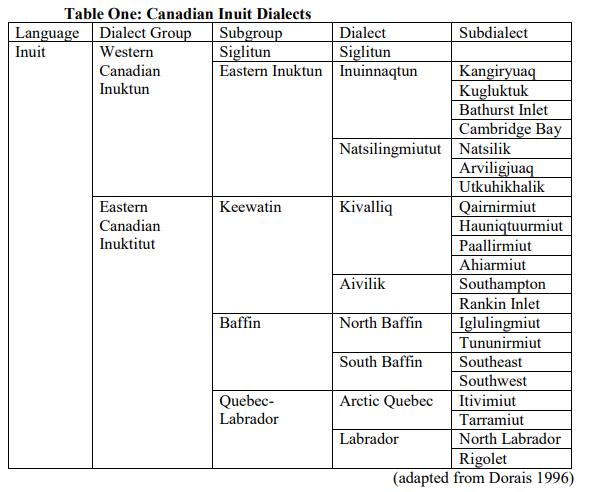
Image 1: Source: Canadian Inuit dialects by region. Shelley Tulloch, Preserving Inuit Dialects in Nunavut (2005: 6) (https://assembly.nu.ca/library/GNedocs/2005/000487-e.pdf).
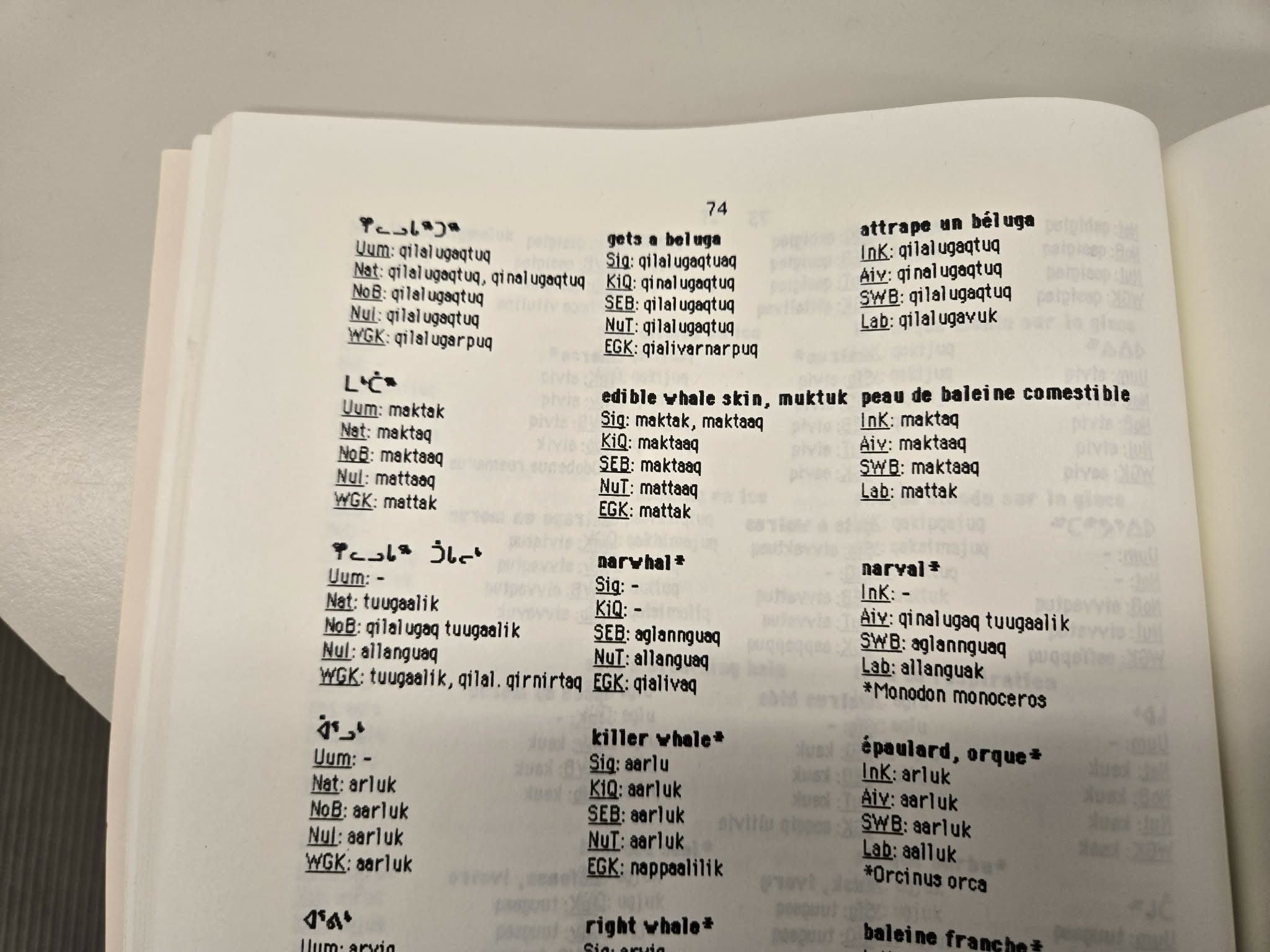
Image 2: Maktaaq spelling variants listed by dialect group. Source: Dorais, 1000 Inuit Uquasingit: 1000 Inuit Words = 1000 Mots Inuit (1990: 74)
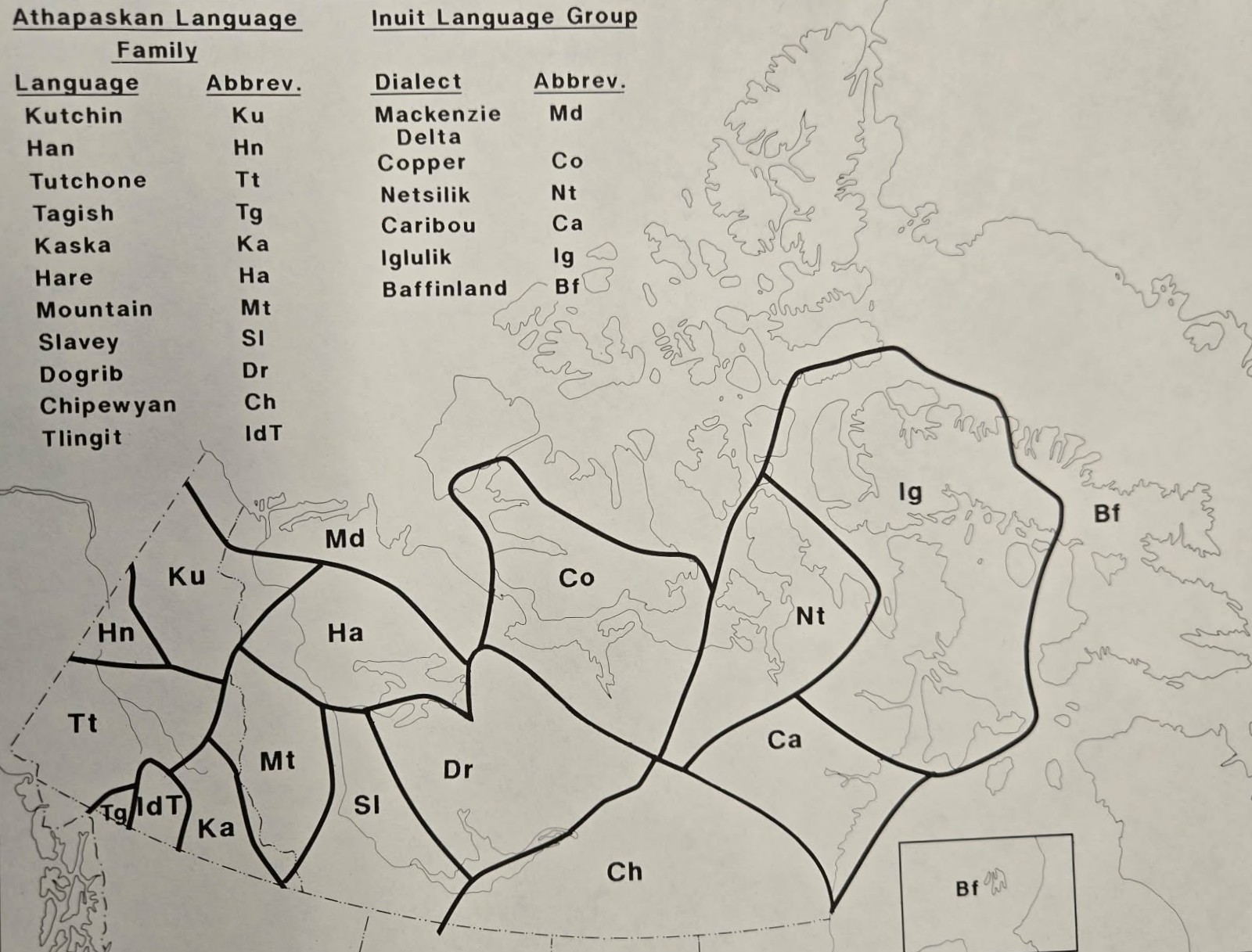
Image 3: Map reflecting Inuit dialect groups by region. Source: Minister of Supply and Services Canada, Canada's North: The Reference Manual (1991: 3-15).
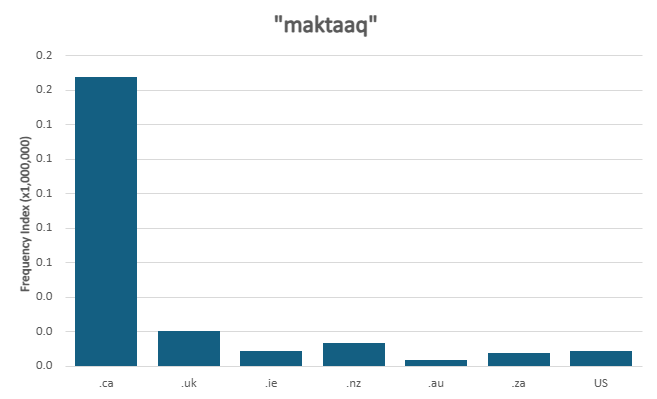
Chart 1: Internet Domain Search, 23 January 2026